Why disinfection is a separate step from removal
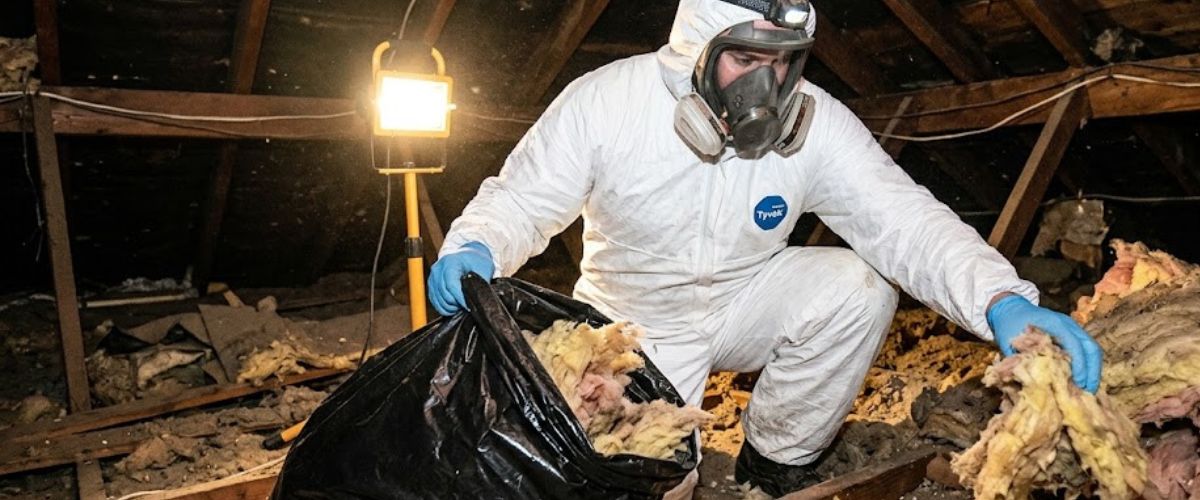
We remove rodents from a Chattanooga home, through trapping, exclusion, or both, eliminates the ongoing contamination source but not the contamination already present. Dried rodent urine on attic rafters, fecal accumulation on crawl space floor joists, and the saliva and sebaceous gland residue along mouse runway paths all remain biologically active hazards after the animals are gone. They can be disturbed during renovation, transmitted to humans through HVAC airflow, or contacted during routine attic or crawl space access. Sanitation and disinfection is the step that actually eliminates this residual risk.
In Chattanooga's humid climate, contamination on porous wood surfaces (rafters, joists, framing) stays biologically viable longer than in drier regions. Leptospirosis organisms in Norway rat urine can survive for weeks in moist conditions, a relevant concern for properties in the Tennessee River corridor and for crawl spaces with moisture management problems. EPA-registered disinfectants applied correctly to these surfaces inactivate the pathogens and reduce the ongoing health risk to household occupants and any contractors working in the treated spaces.
What the disinfection service covers
- Attic structural surfaces: Rafters, sheathing, blocking, and any insulation facing not scheduled for removal. HEPA vacuuming of fecal deposits first, then EPA-registered disinfectant applied by spray to all surfaces within the contaminated zone. Enzymatic odor neutralizer applied over the disinfectant layer.
- Crawl space floor joists and piers: Same protocol as attic, HEPA vacuum then disinfectant spray on joists, blocking, and pier surfaces within the affected area. Vapor barrier surface treated before new sheeting is installed.
- Living area surfaces: For house mouse infestations that reached kitchen cabinets, under appliances, or interior wall junctions, wipe-down with EPA-registered disinfectant on all contacted surfaces. Sealed cabinetry interior treated with fine spray after contents removed by homeowner.
- Entry-surface pheromone treatment: Enzymatic cleaner applied to all confirmed entry points and adjacent surfaces to disrupt the pheromone trails that attract subsequent rodents to previously used pathways.
Pricing
| Scope | Typical range | Notes |
|---|---|---|
| Inspection + disinfection scope | Free | Contamination extent assessed. Written scope before work begins. |
| Attic surface disinfection (insulation intact) | $350–$750 | HEPA vacuum + EPA disinfectant + enzymatic odor neutralizer. |
| Attic structural disinfection (post-insulation removal) | $400–$800 | Full rafter + sheathing treatment after contaminated insulation removed. |
| Crawl space disinfection | $300–$650 | Floor joists + piers + vapor barrier surface. |
| Living area disinfection | $200–$450 | Kitchen cabinets, under appliances, wall junctions. |
Factors that change your specific quote
- Area square footage requiring treatment
- Antimicrobial product — basic disinfectant vs EPA List N hospital-grade
- Contamination level — light surface vs heavy saturation (rodents nesting in materials)
- Application method — fogging, hand-spray, or full electrostatic application
- Number of treatment passes — single application vs multi-pass for heavy contamination
About insurance: Sanitation work is sometimes covered when paired with documented rodent damage that triggered the contamination. Itemized invoices help.
Want your real number? Call (844) 635-0403 for a free on-site free decontamination quote.
Common mistakes with rodent sanitation in Chattanooga homes
Vacuuming droppings with a household vacuum. Household vacuums lack HEPA filtration and recirculate contaminated particles back into the home's air supply. The right equipment for dropping cleanup is HEPA-filtered or wet-cleaning methods that don't aerosolize the contamination. Household-vacuum cleanup of significant rodent dropping accumulations produces worse air quality during the work than leaving the droppings alone.
We use ammonia-based cleaners on rodent contamination. Ammonia in cleaning products mimics rodent urine odor and can actually attract additional activity rather than discouraging it. Cleaning products exactly designed for rodent contamination (enzymatic neutralizers, EPA-registered antimicrobials) are formulated to break down the contamination without producing attractant by-products.
Skipping the dwell-time requirement on antimicrobial products. EPA-registered disinfectants require specific contact time at the treated surface to achieve labeled efficacy. Applying the product and immediately wiping it off, common when treating large areas under time pressure, produces partial disinfection that doesn't meet the label claim. Reading and following the dwell-time specification on each product matters as much as the product choice.
Frequently asked questions
What pathogens can rodents leave behind in a Chattanooga home?
The primary concerns: hantavirus (deer mice in Hamilton County's rural-edge properties), leptospirosis (Norway rats along the Tennessee River corridor), and salmonella (all three Chattanooga species). Dried rodent urine and feces that are disturbed, during cleaning, renovation, or HVAC operation, can aerosolize these pathogens. EPA-registered disinfection eliminates the risk from treated surfaces.
Can I clean up rodent droppings myself?
You can, with precautions: don't vacuum or sweep (aerosolizes particles), wear gloves and an N95 minimum, wet droppings with bleach solution or EPA disinfectant before wiping, double-bag all material. For attic and crawl space cleanup with heavier contamination, professional disinfection with negative-pressure containment is safer.
Is disinfection enough, or does insulation need to be removed too?
Disinfection of lightly contaminated intact insulation is appropriate for single-season infestations. For urine-saturated, compressed, or heavily fecal-loaded insulation, removal is required first, EPA disinfectants can't penetrate saturated insulation to reach embedded contamination. Removal is the prerequisite for effective structural surface disinfection.
What does rodent sanitation and disinfection cost in Chattanooga?
Attic surface disinfection with insulation intact: $350–$750. Crawl space disinfection: $300–$650. Living area disinfection after house mouse infestation: $200–$450. Scope and cost confirmed after the free inspection.
What products do you use for rodent-related sanitation in Chattanooga homes?
EPA-registered antimicrobials selected by surface type and contamination level. For hard surfaces (countertops, hardwood, sealed concrete): quaternary ammonium compounds or hydrogen peroxide-based products with proven efficacy against Salmonella, Leptospira, and bacterial contamination typical of rodent waste. For porous surfaces (wood framing, attic decking, sub-flooring): penetrating antimicrobial products that reach into the substrate. For HVAC and ductwork: products exactly labeled for HVAC contact and approved for use in air-handling systems. Each product has different dwell times, ventilation requirements, and surface compatibility, we apply the appropriate product for each surface, not a one-size-fits-all approach.
Is hantavirus a real risk in Chattanooga homes with rodent contamination?
Real but rare. Tennessee Department of Health confirms hantavirus cases periodically, total annual case counts are low (single digits statewide most years) but each case is serious with significant fatality rate. The risk is exactly associated with deer mice (Peromyscus maniculatus) rather than house mice or rats. Deer mice are more common in rural Hamilton County, Cumberland Plateau properties, and homes with rural-edge adjacency. Urban and suburban Chattanooga properties have low hantavirus risk but the general principle of avoiding direct exposure to rodent waste still applies, minor risks compound across other rodent-borne pathogens including Salmonella and Leptospira.
How long after sanitation can I let my children play in the affected area?
Depends on the product used and ventilation. Standard EPA-registered antimicrobials require 10-30 minutes dwell time before surfaces are safe for normal contact. After dwell time and standard ventilation, the area is safe for normal use including children. Heavier-duty products used in severe contamination cases (concentrated commercial-grade antimicrobials) sometimes require 4-12 hours of post-application ventilation before normal occupancy. We communicate the specific re-entry timeline at the start of each job so homeowners can plan around it.
Will sanitation eliminate the rodent odor immediately?
Most surface odors clear within 24–72 hours of complete sanitation. Deep-absorbed odors in porous materials (saturated insulation, wood framing with urine penetration, soiled sub-flooring) often require physical removal of the affected material, sanitation cleans surfaces but can't reach into deeply contaminated substrate. The sequence is: sanitation removes surface contamination immediately, decontamination treatments reduce absorbed contamination over 1–2 weeks, removal of severely-contaminated material eliminates the remaining source. Properties with severe contamination usually need all three steps.
Do I need professional sanitation, or can deep cleaning suffice?
Depends on contamination level. Light surface contamination on impermeable surfaces (a small accumulation of droppings on a kitchen shelf) can be handled with proper personal protective equipment (N95 mask, disposable gloves), EPA-registered disinfectant, and careful handling. Heavier contamination (significant droppings accumulation, urine saturation, contaminated insulation, presence of carcasses) warrants professional handling, the equipment for HEPA containment, the products for thorough decontamination, and the disposal protocols for contaminated material aren't homeowner-accessible. The threshold is roughly: if you can clean it in 15 minutes with a spray bottle and disinfectant, you probably can DIY. If you need bags and a vacuum, professional handling is safer.