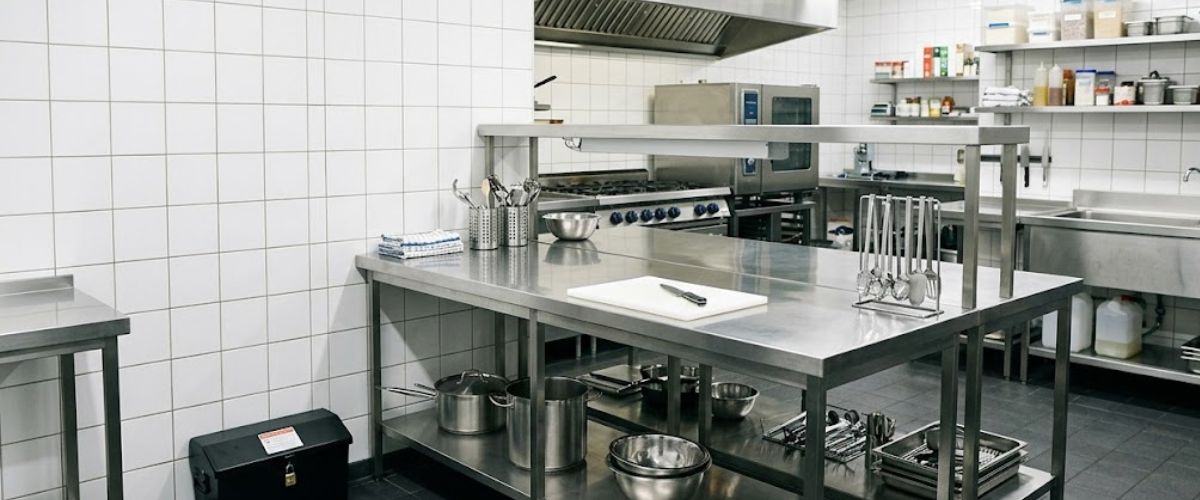
The Chattanooga restaurant rodent problem, why it's different from residential
Downtown Chattanooga and the Southside restaurant corridor have the most concentrated Norway rat pressure in Hamilton County. The combination of food-waste density (dumpster pads, grease traps, loading dock spillage), Tennessee River proximity, and the historic rail infrastructure underneath large sections of the city's commercial core creates conditions that sustain large Norway rat populations year-round, regardless of what any single restaurant does on its own premises.
This is the core challenge of restaurant rodent control in Chattanooga: the pressure is communal but the health code inspection is individual. A restaurant running a model pest control program can still get cited if adjacent buildings aren't cooperating. The most effective restaurant programs we run are multi-tenant or block-wide, shared exterior bait station perimeters that reduce the communal pressure, not just the individual property's pressure.
Beyond the Norway rat problem, Chattanooga restaurants also face seasonal house mouse pressure in fall and winter, particularly in older downtown and Southside buildings where the brick-and-mortar construction has deteriorated at utility penetration points. Mice are a different treatment profile than Norway rats and often go unnoticed until they appear in a dining room during service.
Health code compliance, what Tennessee inspectors look for
Tennessee Department of Health food service inspections follow FDA Food Code standards. Rodent-related findings are almost always classified as critical violations, the highest-severity category, which can trigger a re-inspection requirement, a corrective action order, or a closure.
Inspectors document:
- Live or dead rodents anywhere on the premises, a single confirmed sighting is usually an automatic critical violation
- Rodent droppings in food preparation areas, storage areas, dry goods, or along walls and under equipment
- Gnaw marks on food packaging, structural elements, or utility conduit
- Grease rub marks along walls and behind fixed equipment, these show active rodent travel routes
- Rodenticide bait inside food preparation or storage areas, also a violation, because rodenticide use near food contact surfaces is prohibited under FDA Food Code
- Absence of a pest control program, inspectors can ask for pest control service documentation and log records
We maintain an active, documented pest control program is a mitigating factor in inspections. Our service logs are formatted for health inspection presentation and available on request.
The restaurant rodent control protocol
Snap traps only, no bait
Victor Professional snap traps placed behind fixed equipment, at wall junctions, in server stations, and under dishwasher units. No rodenticide, no bait stations, no glue boards. All trap locations logged.
Snap traps + monitoring
Snap traps in dry-goods storage rooms, walk-in utility areas, and back-of-house corridors. Tracking stations used to map activity in areas where trapping hasn't caught anything, confirms presence or absence.
Tamper-resistant bait stations
Locked, labeled, tamper-resistant exterior bait stations placed at burrow entrances, dumpster pad perimeters, and loading dock corners. Serviced and logged on each visit. Positioned per health code guidelines for exterior placement.
Entry-point sealing
Floor drain covers, door sweeps, grease-trap access gaps, pipe penetrations through kitchen floors and walls. Assessment on initial visit, prioritized sealing on the same or next visit.
Pre-inspection checklist for Chattanooga restaurants
What to have ready before a health inspection
- Pest control service log with dates, technician ID, findings, and actions taken
- Exterior bait station map showing station locations relative to building
- Documentation that no rodenticide is used inside the building
- Snap trap log showing interior trap locations and dates last checked
- Evidence of exclusion work (photos, contractor invoices) for any previously cited entry points
- Grease trap maintenance log (grease traps are a Norway rat attractant, inspectors check maintenance records)
- Dumpster pad cleaning schedule
- Door sweep inspection record showing all exterior doors have functional sweeps
Discreet scheduling for Chattanooga restaurants
A pest control van parked outside during lunch service is the kind of visibility no restaurant wants. We work around your schedule by default, not as an add-on. Standard options:
- Pre-opening: Arrival before your first staff member. Kitchen access is available. Minimal disruption to prep.
- After closing: Most common scheduling for dinner-focused establishments. Full access to all kitchen and storage areas after the last table turns.
- Mid-morning (off-peak): After breakfast service and before lunch, for establishments that close between meal periods.
- Exterior-only visits: Exterior bait station service only, without interior entry, can be scheduled independently of interior trap service when interior access isn't needed.
We arrive in unmarked vehicles and carry equipment in neutral cases on request.
Chattanooga restaurant pressure zones
Norway rat pressure in Chattanooga's food-service district is not uniform. The buildings and blocks with the highest consistent Norway rat load:
- Southside (Market Street–MLK corridor): The highest restaurant density in Chattanooga. Shared alley dumpster pads, grease-trap access points, and the proximity to the rail infrastructure create year-round Norway rat pressure that affects every tenant in the corridor regardless of individual practices.
- Downtown (Broad Street–Chestnut Street area): Tennessee River proximity and the tourism-driven restaurant density create persistent Norway rat pressure at the waterfront blocks and the hotel-adjacent restaurant clusters.
- Tennessee Aquarium corridor: Tourist-traffic food waste and the Tennessee River margin combine to make the blocks immediately around the aquarium among the most Norway-rat-active commercial blocks in Hamilton County.
- Hamilton Place Mall perimeter (East Brainerd): Food court and restaurant-row establishments near the mall deal primarily with house mice (not Norway rats) from the adjacent storm-drain infrastructure and the suburban warehouse-adjacent harborage.
Health inspection coming up? Call today for same-day service.
Documentation-ready service logs provided on every visit. Open 24/7.
Restaurant rodent control pricing in Chattanooga
| Service | Typical range | Notes |
|---|---|---|
| Initial inspection + baseline treatment | $250–$500 | Full interior/exterior assessment, initial snap trap set, exterior bait station install. |
| Monthly program (small–mid restaurant) | $150–$250/mo | Interior snap trap service + exterior bait station maintenance + service log. |
| Monthly program (large / high-pressure) | $250–$450/mo | Higher station count, more frequent checks, multi-tenant coordination. |
| Emergency / pre-inspection response | $300–$600 | Same-day, includes immediate treatment and service documentation for inspection. |
| Exclusion sealing (kitchen / BOH) | $300–$700 | Floor drains, door sweeps, pipe penetrations. Quoted per scope after inspection. |
Factors that change your specific quote
- Kitchen size and back-of-house square footage
- Service frequency — FDA Food Code typically requires monthly minimum, weekly common for high-volume
- Documentation requirements — service log format for health department inspections
- After-hours service — most restaurant treatment happens between close and open
- Equipment-specific scope — walk-in coolers, ice machines, grease traps each carry separate scope
About insurance: Restaurant rodent control is operational, not insurance-eligible. Health department compliance documentation is the primary deliverable.
Want your real number? Call (844) 635-0403 for a free on-site compliance-ready program quote.
Common mistakes Chattanooga restaurant operators make with rodent control
Restaurant rodent control is more documentation and discipline than treatment. The operators who get the best inspection results aren't the ones with the most aggressive treatment programs, they're the ones who avoid the predictable mistakes that turn small issues into critical violations.
Putting bait inside the kitchen because "we have a rat right now." FDA Food Code prohibits rodenticide bait inside food preparation, food storage, and food contact areas. A single inspector visit that finds a bait station inside the kitchen produces a critical violation regardless of whether rats are present. Interior treatment uses snap traps and monitoring devices only. Bait stations stay exterior. Operators sometimes do this themselves before calling us, and the violation precedes the call.
Storing pest control service records in the manager's office instead of with the food handler permit. Hamilton County Health Department inspectors expect to find pest control records during the inspection walkthrough, in the same documentation binder as the food handler permits and the temperature logs. Records in a separate office, especially one the inspector can't access without escort, count as missing for inspection purposes. The location of the records affects the inspection result.
Letting back-door deliveries leave the loading dock door propped open all morning. Most restaurant rodent incursions come through the back-of-house loading area during morning delivery windows. Norway rats from adjacent dumpster enclosures, particularly in the Southside and Downtown restaurant corridors, exploit the open-door window to enter and find harborage before the dock door closes. Door discipline matters more than treatment frequency for high-density restaurant blocks.
We clean the dumpster pad once a week. Daily power-washing or scrubbing of the dumpster enclosure floor is the standard for high-volume Chattanooga restaurants. Weekly is insufficient. Food residue accumulates, attracts outdoor populations, and creates the pressure that drives interior incursion. Cleaning frequency at the dumpster pad is correlated with interior pest pressure across every restaurant property type we work with.
Believing that a small operation doesn't need a documented program. Tennessee health code applies to all food-service establishments regardless of size. A 12-seat coffee shop is subject to the same documentation requirements as a 200-seat full-service restaurant. The frequency and scope of the program scales with the operation, but the existence of a written program isn't optional. Operators who try to skip the documentation step at low volumes face the same critical violations as larger operations during inspection.
Frequently asked questions
What do Tennessee health inspectors look for when it comes to rodents?
Inspectors follow FDA Food Code standards and look for live or dead rodents, droppings, gnaw marks, grease rub marks, rodenticide inside the building (itself a violation), and the absence of a pest control program. A single confirmed rodent sighting usually results in a critical violation. Active, documented pest management is a mitigating factor.
Can you service our restaurant without customers seeing you?
Yes, we schedule before opening, after closing, or mid-morning based on your operation. Technicians arrive in unmarked vehicles and carry equipment in neutral cases on request. Exterior bait stations are positioned to be unobtrusive from street and dining areas.
Can you use rodenticide bait inside our restaurant kitchen?
No, and no legitimate pest control operator should. FDA Food Code prohibits rodenticide bait in food preparation, storage, and food-contact surface areas. Interior rodent control in food service uses snap traps and mechanical methods only. Rodenticide bait stations go on the exterior perimeter only.
How quickly can you respond before a health inspection?
Same-day inspection is available across Hamilton County. We can provide same-day service and supply service documentation health inspectors ask for. Call (844) 635-0403, we answer 24/7.
What does restaurant rodent control cost in Chattanooga?
A monthly program runs $150–$350 per month depending on establishment size and station count. Initial setup runs $250–$500 above the monthly rate. Annual contracts are available for established relationships.
What documentation do you provide for Hamilton County Health Department inspections?
Each service visit produces a written log entry showing date, technician, scope of inspection (interior zones checked, exterior stations serviced), any activity observed, any product applied with EPA registration number and target area, and corrective recommendations made to the operator. The full service binder is kept on-site, available to the inspector on request. We also provide pest-control proof-of-service letters for state regulatory reviews and copies of all product MSDS for any pesticide stored or used on the property. This documentation is part of every commercial service contract, restaurants in particular cannot afford a critical violation on the pest-control line item.
What's the difference between residential and commercial restaurant rodent control?
Three substantive differences. Documentation: commercial work generates regulatory-compliant logs every visit. Residential doesn't need them. Bait restrictions: we use no rodenticide inside restaurant food-prep, food-storage, or dining areas, interior treatment is exclusively mechanical traps and monitoring devices. Bait stations are exterior-only, locked, anchored, mapped. Frequency: commercial accounts usually need weekly or bi-weekly service to maintain the documentation pattern inspectors look for. Residential is event-driven or quarterly. The actual rodent biology and identification work is the same, what changes is the regulatory wrapper and the placement constraints.
How quickly can you respond if a restaurant has a rodent emergency before a health inspection?
Same-day for any active restaurant in Hamilton County, including the Southside and Downtown restaurant corridors and the Hamilton Place commercial district. Pre-inspection emergency calls, when you've just received notice of an upcoming inspection and need everything tightened up, are common in the days following any local restaurant making the news for a rodent finding. We do a full walkthrough with the operator, document the current state, identify any visible activity or evidence, treat what needs treatment, and produce a dated inspection-ready service log before we leave. Same-day commercial response is built into our weekend and after-hours availability.
Will rodent control activity be visible to my customers?
No. Interior monitoring devices are placed below sightlines, behind equipment, inside cabinets, in storage rooms, and in service corridors, never in dining areas. Exterior bait stations are placed against the building foundation in service areas, dumpster enclosures, and landscape edges where the dining public won't find them. Service visits are scheduled for non-operating hours where the restaurant prefers, and our technicians wear professional uniforms without aggressive pest-control branding when on-site during operating hours. The goal is regulatory compliance and population control without compromising the customer-facing presentation of the business.