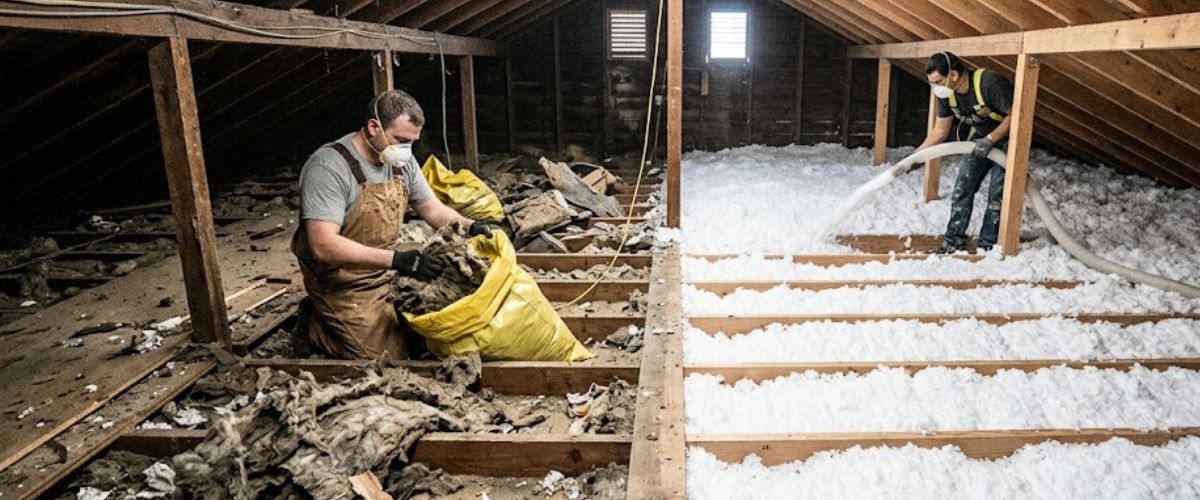
The damage repair sequence after a Chattanooga rodent infestation
Rodent damage repair is the fourth and final phase of a complete rodent cleanup, after population control, exclusion sealing, and decontamination. Attempting repairs before the population is controlled traps live animals in sealed spaces. Installing new insulation before decontamination creates a contaminated substrate under new material. Repairing ductwork before the entry points are sealed means the next seasonal rodent population damages the new duct sections as readily as the old ones.
The correct sequence is sequential and non-compressible: control → seal → decontaminate → repair. We coordinate all phases and can manage the full sequence, including contractor referrals for electrician assessment of gnawed wiring, HVAC contractor coordination for major duct replacement, and structural assessment referrals for load-bearing member damage that exceeds our scope.
Damage repair by category
- Attic insulation: Contaminated insulation removed via negative-pressure equipment, structural surfaces decontaminated, wiring inspected (electrician referral if needed), then new blown-in insulation installed to current IECC R-49 code value for Chattanooga Climate Zone 4.
- Flex ductwork: Damaged sections inspected for patch-vs-replace determination. Minor punctures patched with HVAC mastic and tape. Major tears and multi-puncture sections replaced with new flex duct of matching diameter. Duct insulation jacket inspected for nesting and replaced where rodents nested inside.
- Vapor barrier (crawl space): Damaged sheeting removed, floor joists decontaminated, new 6-mil minimum polyethylene sheeting installed with proper overlaps, wall attachment, and penetration seals.
- Pipe foam insulation: Foam insulation on hot water, refrigerant, and supply pipes in attics and crawl spaces that was gnawed or stripped by rodents replaced with new foam tubing. Prevents condensation and energy loss in Chattanooga's humid climate.
- Structural wood (minor gnaw damage): Surface gnaw damage on rafters, joists, and sheathing that doesn't affect structural capacity, patched with wood filler and sealed. Significant load-bearing member damage referred to a structural engineer before any repair.
Pricing
| Scope | Typical range | Notes |
|---|---|---|
| Damage inspection + repair scope | Free | Line-item written estimate. Damage repair never estimated without inspection. |
| Flex duct patch (1–3 sections) | $150–$400 | HVAC mastic + tape repair. Section replacement if needed quoted separately. |
| Attic insulation replacement (1,500 sq ft) | $1,200–$2,500 | Blown-in to R-49. Decontamination separate line item. |
| Vapor barrier replacement (800–1,500 sq ft) | $800–$1,800 | Old barrier removal + joist decon + 6-mil new install. |
| Structural wood patching (minor) | $200–$500 | Surface gnaw damage. Load-bearing damage referred to structural engineer. |
Factors that change your specific quote
- Repair scope — single-system (HVAC duct, insulation patch) vs full restoration
- Material grade — R-30 vs R-49 insulation, 6-mil vs 12-mil vapor barrier
- Structural damage extent — surface gnawing (cosmetic) vs load-bearing damage (engineer required)
- Decontamination phase — required before any new material installs
- Sequence — repair must follow exclusion sealing, not precede it
About insurance: Rodent damage repair sometimes qualifies under sudden-and-accidental loss provisions, particularly for HVAC and wiring damage. Documented chronological proof helps the claim.
Want your real number? Call (844) 635-0403 for a free on-site free damage assessment.
Common mistakes during rodent damage repair
Damage repair scope and sequence determine whether the work resolves the issue or creates new ones. Five patterns recur in rodent damage repair work we evaluate or redo across Hamilton County properties.
We repair before treatment completion. Damage repair done while live rodents remain in the structure means the new materials begin getting damaged immediately. Patched insulation gets re-soiled within weeks. New flex duct gets chewed. Replaced wiring gets gnawed at the new locations the rodents now favor. The proper sequence is treatment to verified zero activity, then damage repair, then ongoing prevention, not parallel work.
We use the same materials that were damaged originally. Standard Romex sheathing damaged by rodents gets replaced with the same standard Romex. The rodents come back and chew the new material the same way they chewed the old. Rodent-resistant alternatives, metal-clad wiring, polyethylene-sheathed flex duct alternatives, treated insulation, cost modestly more but resist future damage. For properties in known high-pressure neighborhoods, upgrading materials during repair is more cost-effective than the standard-material replacement.
Skipping electrical inspection for chewed wiring. Damage repair should include licensed electrical inspection of all accessible wiring runs, particularly in attic spaces and behind appliances where rodent activity was documented. Repair contractors who aren't electricians sometimes patch insulation over visibly-damaged wiring without flagging it for electrical inspection. The visible damage is usually a fraction of what's actually present. Full electrical inspection catches the rest.
Patching flex duct instead of replacing damaged sections. HVAC flex duct with multiple gnaw holes can be patched with HVAC mastic in the short term, but the duct liner integrity is compromised and the patch usually fails within 12-24 months. Full section replacement costs more upfront and lasts the remaining lifespan of the duct system, usually 15-25 years. The repair-versus-replace decision should be made by an HVAC technician, not by a pest control contractor.
We treat attic restoration and damage repair as the same job. Attic restoration is one type of damage repair, the most common, but not the only. Properties may need wiring repair, structural framing repair, ductwork replacement, plumbing repair (for pipes damaged by rodent activity), or roof deck repair in addition to or instead of insulation work. Pre-repair scope assessment identifies which categories apply to the specific property. Assuming "attic restoration covers it" sometimes misses material repair work.
Frequently asked questions
What types of damage do rodents cause in Chattanooga homes?
The four most common: attic insulation damage (urine saturation, compression, fecal loading). Electrical wiring gnaw damage in attics and wall cavities (fire risk requiring electrician assessment). Flex ductwork punctures and tears in attics and crawl spaces. And vapor barrier damage in crawl spaces from Norway rat burrowing and nesting.
Do you repair gnawed electrical wiring?
We identify and document gnawed wiring during inspections, but electrical repair is licensed electrician work. We coordinate with electricians for our clients and will not re-insulate an attic over uninspected gnawed wiring. Wiring assessment is a gate between decontamination and repair completion in every project.
Can flex ductwork be patched or does it need replacement?
Minor punctures under 2 inches can be patched with HVAC mastic tape and mastic compound, durable and restores performance. Larger tears, multi-puncture sections, or duct with rodent nesting inside the insulation jacket require section replacement. We assess each section individually.
What does rodent damage repair cost in Chattanooga?
Highly variable by damage type and extent. Rough ranges: insulation replacement (1,500 sq ft): $1,200–$2,500. Flex duct patch (1–3 sections): $150–$400. Vapor barrier replacement (800–1,500 sq ft): $800–$1,800. Line-item written estimate always provided after the free damage inspection.
What rodent damage poses the highest fire risk?
Chewed wiring insulation is the single highest fire-risk damage rodents produce. Exposed conductor in attic or wall cavity can arc against framing, particularly when contacted by moisture, dust, or insulation. The National Fire Protection Association attributes thousands of US house fires annually to rodent-related electrical causes. Chattanooga Fire Department has investigated multiple home fires traced to rodent-damaged wiring over the past decade. If a rodent inspection identifies chewed wiring, electrical repair is genuinely urgent, not cosmetic or aesthetic.
Do you have a licensed electrician on your team?
No, and we recommend you be wary of any rodent control company that says yes. Electrical repair requires licensed electricians familiar with Tennessee electrical code, and bundling it with pest control creates incentive misalignment. Our protocol: we identify and document rodent-damaged electrical components, photograph the damage with location and severity rating, and refer to licensed electricians. Several Chattanooga area electricians specialize in rodent-damage repair and we provide referrals based on the specific scope. Electrical safety isn't a pest-control function.
How do I document rodent damage for an insurance claim?
Five elements make a successful claim documentation package. Photographs of damage with time-stamp and location reference (room and component). Written professional inspection report identifying scope, cause, and cleanup requirement. Itemized cost estimate from qualified repair contractors. Timeline documentation showing when damage was discovered relative to the policy period. Evidence (if applicable) that the damage was sudden and accidental rather than gradual maintenance neglect. We provide the photo documentation, inspection report, and itemized estimate as part of damage assessment service. The other elements come from the homeowner and adjuster process.
What's the typical cost of rodent damage repair on a Chattanooga home?
Wide range. Minor damage (one or two chewed wires, partial flex duct replacement, localized insulation removal): $400–$2,000. Moderate damage (multiple wiring runs, significant duct damage, partial attic insulation replacement): $2,000–$8,000. Major damage (extensive wiring damage, full attic restoration, structural framing damage): $8,000–$35,000+. The biggest cost driver isn't the rodent damage itself, it's how long the infestation went undetected. A 3-month-old infestation generates minor repair. A 3-year-old infestation generates major restoration.
Can I claim rodent damage on insurance for sudden discovery?
Sometimes, depending on policy language and the cause-of-discovery framing. Sudden and accidental damage caused by rodents, particularly fire damage from chewed wiring or significant electrical damage discovered during a covered event, sometimes triggers coverage. Gradual wear excluded by most policies usually applies to extended rodent infestation that wasn't addressed. The argument for coverage usually works when: damage was sudden in onset (acute event), discovery was sudden (you didn't 'know' about the infestation), and the damage exceeds maintenance-level definitions. Each policy is different. We provide documentation that lets your adjuster apply the policy language.