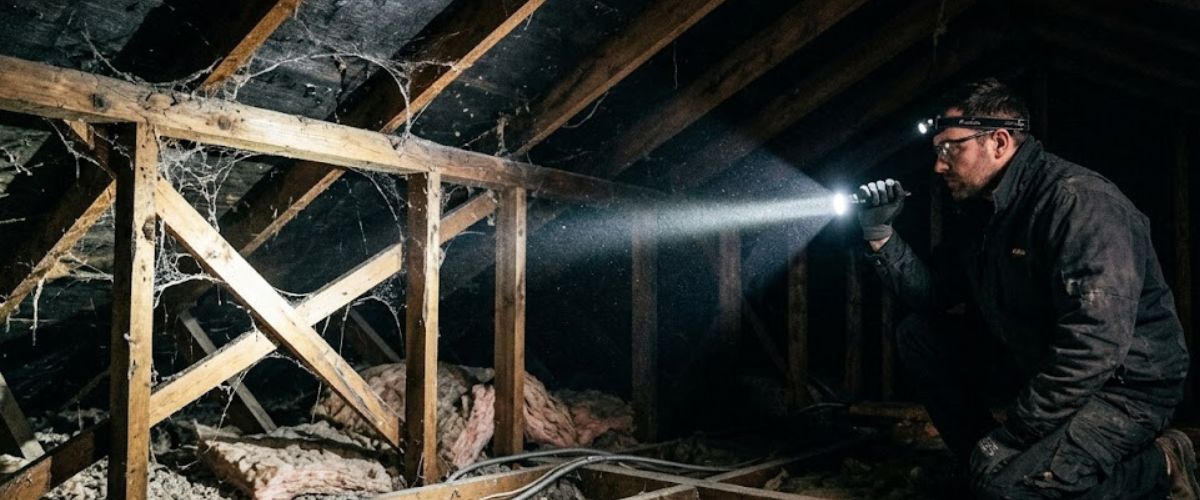
How vacant properties become rodent-infested in Chattanooga
A Chattanooga home that goes vacant during the fall rodent pressure season. October through January, can develop a significant interior infestation within 60–90 days. Roof rats that had been deterred by the activity of an occupied home find the attic newly quiet and permanently available. House mice that were staying outdoors or in the garage move into the kitchen and wall voids as temperatures drop. Norway rats that had established outdoor burrows near the foundation begin exploring the now-silent interior.
The neighborhoods with the most vacant-property rodent complaints in Chattanooga's property management market are those with the highest ambient pressure: Avondale, East Lake, Orchard Knob, Glenwood, and the older sections of East Chattanooga. These neighborhoods combine older housing stock with entry points, modest outdoor rodent pressure, and some property vacancy that creates a consistent pipeline of infestation opportunities.
Vacant property rodent control program
- Full interior inspection: Access to all rooms, attic, crawl space, and basement without occupancy constraints. Activity mapping by room and zone. Written report suitable for lender, estate, or property management records.
- Treatment setup: Snap traps in all activity zones, kitchens, wall junctions, attic, crawl space. Exterior bait stations on the perimeter. No access restrictions during the treatment period.
- Scheduled follow-up visits: Every 7–14 days during active trapping. Trap check, reset, and activity log update. Coordinated with property keyholder for access.
- Exclusion sealing: Strongly recommended for vacant properties, a sealed home doesn't re-infest during extended vacancy. Quoted after the initial inspection. All entry points sealed using the same methods as occupied-home programs.
- Pre-sale or pre-occupancy clearance documentation: Written activity record confirming the infestation has been resolved and exclusion sealing is in place, useful for real estate transaction disclosure or lender documentation.
Pricing
| Scope | Typical range | Notes |
|---|---|---|
| Initial inspection | Free | Full interior + exterior assessment. Written report for property records. |
| Treatment program (60–90 days) | $450–$900 | Setup + 3–4 follow-up visits. Standard single-family home. |
| Exclusion sealing | $350–$1,200 | Quoted after inspection. Strongly recommended for extended vacancy. |
| Pre-sale clearance documentation | Included | Written activity record included with program. No additional charge. |
Factors that change your specific quote
- Property condition — habitable vs significantly deteriorated
- Vacancy duration — short-term vs long-term vacant properties have different infestation levels
- Treatment scope — assessment-only vs full removal and exclusion
- Documentation — bank/asset manager format, REO compliance
- Property access coordination — keybox vs scheduled access
About insurance: REO and vacant-property rodent control is operational. Cost is typically deducted from sale proceeds.
Want your real number? Call (844) 635-0403 for a free on-site vacant property assessment.
Common mistakes with vacant Chattanooga property rodent management
Assuming the lender or property preservation contractor is handling pest control. National property preservation contracts vary widely in pest management scope, some include monthly exterior service, some include only winterization tasks, some include nothing. A buyer acquiring a foreclosed Chattanooga property should not assume previous treatment was provided. Assume none was provided until documentation proves otherwise.
We clean out a vacant property before pest assessment. Removing trash, abandoned furniture, and accumulated debris before inspection erases the diagnostic evidence, the dropping patterns, runway marks, and harborage signs that inform treatment scope. A 30-minute pre-cleanup inspection produces the documentation and treatment plan. The cleanup happens afterward with appropriate awareness of what's been present.
Underestimating winterization-related entry points. Properties that have been winterized for vacancy, heating turned off, water systems drained, develop new entry points from temperature-driven movement. Sill plates separate slightly with extreme cold, expansion gaps form at corners, and door seals fail without active building conditioning. A property that was sealed correctly while occupied may have measurably more entry points after 90+ days of vacancy.
We close on a property without rodent-specific documentation. Standard home inspections check for visible evidence. They don't go deep on rodent damage, contamination assessment, or attic restoration needs. A rodent-specific pre-closing inspection on a foreclosed property, usually $250-$400, is among the cheapest insurance the buyer can purchase against discovering significant restoration needs after move-in.
Frequently asked questions
Why do vacant homes attract rodents so quickly?
Vacant homes lose the primary deterrent that occupancy provides: consistent noise, movement, and light variation that makes rodents cautious about interior areas. Within weeks of a home going vacant, previously deterred rodents begin exploring. Within 2–3 months in a high-pressure Chattanooga neighborhood, interior infestations are usually established.
Who is responsible for rodent control in a foreclosed Chattanooga property?
Usually the entity holding the property, the lender or servicer for REO properties, or the trustee or estate for properties in probate. We work directly with asset managers, property preservation companies, and real estate attorneys handling estates and trusts.
Can a vacant property be treated effectively without someone living there?
Yes, full interior access without occupancy constraints actually makes treatment more thorough. Snap traps can be placed in locations impractical in occupied homes. The key is scheduled follow-up visits coordinated with the keyholder for access.
What does rodent control for a Chattanooga foreclosure cost?
A 60–90 day vacant property program (inspection + treatment setup + 3–4 follow-up visits): $450–$900. Exclusion sealing quoted separately and strongly recommended. Pre-sale clearance documentation included in the program.
How fast do rodents establish in a vacant Chattanooga property?
Roof rats can establish a breeding colony in an unoccupied attic within 4–6 weeks of vacancy in fall season. Norway rats can establish exterior burrow systems and start interior incursion within 6–8 weeks of vacancy. House mice usually appear within 2–3 weeks of vacancy in any property with existing minor entry points (which most properties have). The lack of human activity is the biggest accelerator, closed doors stay closed, no foot traffic disturbs runways, no garbage gets taken out, and small populations grow without interruption. Properties vacant for 30+ days during October–February usually have measurable rodent activity by the time they're shown to buyers.
Who pays for rodent control on a foreclosed Chattanooga property?
Depends on the status. Pre-foreclosure (delinquent but borrower still owns): borrower's responsibility, though usually no service is happening. Post-sale REO (lender owns): the lender or asset management company handles it, usually through a property-preservation contractor. We work with several national property-preservation firms operating in Hamilton County. Post-sale to a buyer or investor: new owner's responsibility from day one of ownership. The standard practice for buyers acquiring foreclosed properties is to include rodent assessment as part of the pre-purchase walkthrough.
Can you treat a vacant property without electricity or running water?
Yes. All exterior treatment proceeds normally, bait stations don't need utilities. Interior treatment uses battery-powered lighting where the property has no working electrical, and any liquid product application uses water brought to the property. The constraint isn't utility access, it's documentation reliability. Properties with no working locks, broken windows, or active squatter activity require security coordination before service can proceed safely. We work with property preservation companies on those cases.
How long does it take to clear a heavily-infested foreclosed property?
Severely infested vacant properties, usually discovered after 6+ months of vacancy in the fall/winter pressure period, require 4–8 weeks of active treatment to clear, plus 2–4 weeks of cleanup work after clearance. Phases: emergency trap deployment and population reduction (2 weeks), exclusion sealing of identified entry points (1–2 weeks), decontamination of affected areas (1 week), final verification and sanitation (1 week). For properties going to closing in 30 days, accelerated programs are possible but cost 50–80% more than standard.
Should I do rodent treatment before listing a Chattanooga foreclosure for sale?
Yes, in most cases. A pre-listing rodent assessment with documented treatment of any active issue accomplishes three things: prevents buyer inspection findings that trigger repair requests or price reduction. Produces documentation that satisfies buyer due diligence. And protects the listing agent and seller from disclosure exposure if a buyer later claims undisclosed pest activity. The investment is small relative to the deal protection, typical pre-listing assessments and minor treatment run $400–$1,200 on a residential foreclosure, well under typical inspection-driven price concessions.