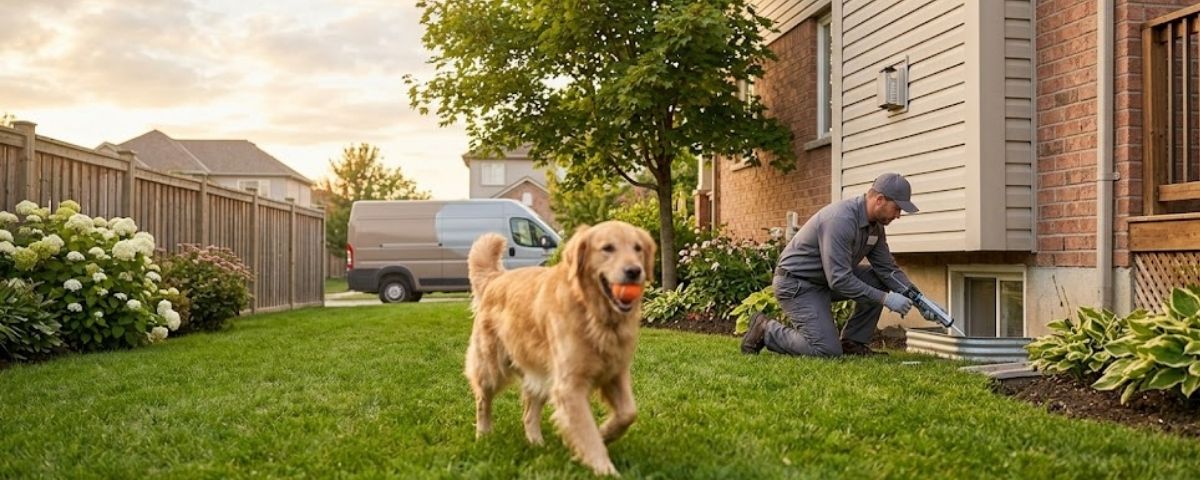
The secondary poisoning risk that pet owners need to understand
Rodenticide bait is the most widely used rodent control tool in residential settings, and the one that creates the most risk for pets when used incorrectly. Secondary poisoning is what happens when a pet eats a rodent that has consumed anticoagulant bait: the rodenticide passes from the rodent's tissue into the pet, producing the same anticoagulant toxicity in the pet that the bait was designed to cause in the rodent.
The anticoagulants most associated with secondary poisoning risk are the second-generation compounds: brodifacoum, bromadiolone, and difethialone. These are the active ingredients in many common rodenticide products and they accumulate in tissue, a rodent that has consumed SGAR bait and is dying slowly (anticoagulants don't work instantly) is mobile enough to be found by a dog or cat, and carries enough toxin in its tissue to cause toxicity in a smaller pet that eats it. The clinical presentation in affected pets, lethargy, pale gums, labored breathing, apparent bruising, usually appears 3–5 days after exposure, by which time the toxin is already systemic.
Chattanooga's specific geography intensifies this risk. The ridge neighborhoods, St. Elmo, Highland Park, Missionary Ridge, Lookout Mountain, have active raptor populations (barred owls, great horned owls, red-tailed hawks) that hunt the same rodents that bait programs target. Secondary poisoning in raptors is documented in Chattanooga's wildlife rehabilitation network. For pet owners and wildlife-aware homeowners in these neighborhoods, the secondary-poisoning risk isn't theoretical, it's a regular event in the surrounding environment.
What pet-safe rodent control actually looks like
Pet-safe rodent control has a specific technical meaning: no rodenticide bait anywhere that creates secondary-poisoning risk. In practice, that means one of three approaches:
Option 1: No rodenticide anywhere. Snap traps (inside), exclusion sealing (outside). Snap traps cause instantaneous death and leave no rodenticide residue in the animal's tissue, eliminating secondary-poisoning risk completely. This is the approach we recommend for any property where pets have meaningful yard access or are likely to investigate dead rodents. See our pet-safe rodent control program.
Option 2: Rodenticide only in physically inaccessible exterior locations. Tamper-resistant stations placed in locations that pets cannot physically access: under deck overhangs, inside enclosed equipment areas, flush against the foundation under eaves. This approach reduces direct bait access risk greatly but doesn't eliminate secondary-poisoning risk from rodents that consume bait away from the station and are later found by a pet. For dogs that actively investigate animal carcasses, this is insufficient.
Option 3: Exclusion sealing as the primary approach. A fully sealed building doesn't have rodents inside, doesn't require interior treatment, and doesn't require exterior bait stations to manage ongoing interior pressure. This is the most pet-safe approach long-term and the most durable, a sealed building protects pets from all rodent-related chemical exposure, not just the bait. See winter rodent proofing for the full exclusion approach.
Backyard chickens: a special case
Hamilton County's outer-suburban and rural properties with backyard chickens face a specific risk that's worth addressing separately. Chickens will eat dead rodents, including rodents that have consumed anticoagulant bait. A chicken that eats a brodifacoum-affected rat accumulates the anticoagulant in its own tissue. Secondary poisoning in backyard flocks is more common in Chattanooga's rural-edge neighborhoods than most poultry keepers realize. For any property with backyard chickens, we strongly recommend a no-rodenticide approach: snap traps only, in enclosed boxes positioned outside the chicken range, combined with exclusion sealing of the coop perimeter. See our barn and shed rodent control program for the poultry-safe protocol.
If you suspect your pet was exposed
If you believe your dog or cat may have consumed a rodent that was exposed to anticoagulant bait, contact your veterinarian or an emergency animal hospital immediately, don't wait for symptoms to develop. Anticoagulant toxicity is treatable with vitamin K1 if started promptly, but becomes more difficult to treat once bleeding has begun. Symptoms appear 3–5 days after exposure: lethargy, pale or white gums, difficulty breathing, or visible external bleeding. The exposure window before symptoms appear is the treatment window, act on suspicion, not on confirmed symptoms.
What to do right now if you have pets and a rodent problem
Don't use consumer rodenticide products if you have pets. Secondary poisoning risk is real, particularly with second-generation anticoagulants sold at hardware stores. A dog or cat that consumes a rodent that consumed bait can require emergency veterinary treatment. The cost of one veterinary emergency usually exceeds the cost of professional pet-safe service for a year.
Skip ultrasonic devices and natural deterrent sprays. Marketed as pet-safe alternatives, these products have documented inefficacy. Federal Trade Commission has issued warnings to manufacturers about deceptive efficacy claims. The pet-safety claim may be accurate. The rodent-control claim isn't.
Use snap traps in protected housing. Standard snap traps in pet-accessible areas can injure curious dogs and cats. Snap traps placed inside small enclosed boxes with rodent-sized entry openings catch rodents while preventing pet access. Several manufacturers make purpose-built versions. DIY versions from small cardboard boxes also work.
Limit interior baiting to tamper-resistant exterior stations. Professional-grade exterior stations are anchored, locked, and sized to exclude even determined pets. Interior baiting is rarely necessary and creates avoidable risk in pet households.
If your pet may have been exposed: Emergency vet immediately. Chattanooga emergency vet contacts include Animal Emergency & Specialty Center of Chattanooga and Veterinary Care and Specialty Group. Call ASPCA Animal Poison Control at 888-426-4435 (small fee may apply) for product-specific guidance while en route. Bring the bait product packaging if available, treatment protocols differ by product. Vitamin K1 therapy started within 12 hours has high success rates. Delays beyond 24 hours greatly increase risk.
Plan for ongoing pet-safe service. Pet-safe programs are usually modestly more expensive than conventional programs (15-25% higher) because they require more labor and more careful product selection. The cost difference is small compared to the alternative of veterinary emergencies and pet exposure incidents.
Same-day rodent control across Hamilton County
Call now — We’ll schedule the inspection while you’re on the phone.