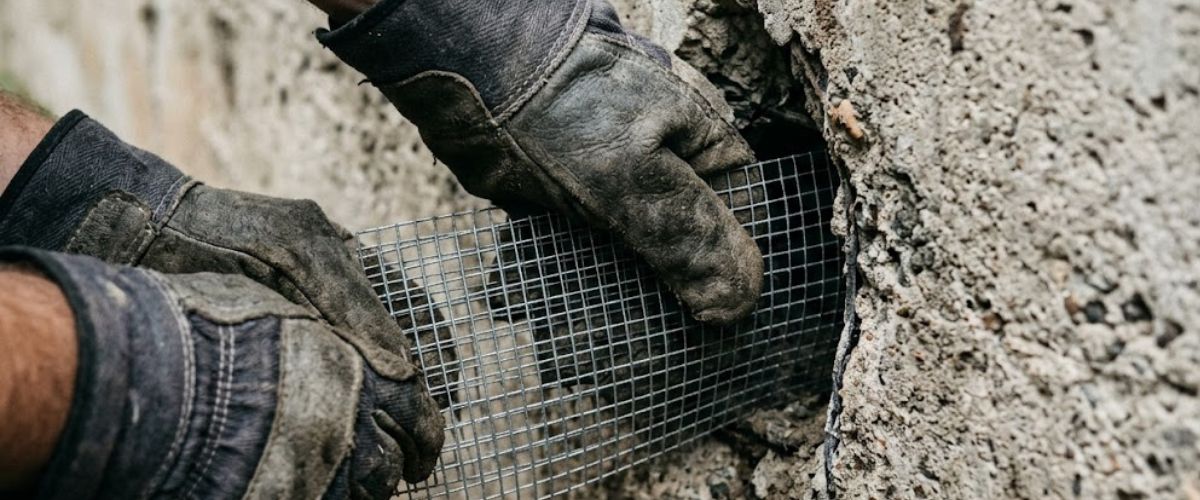
Why entry point detection matters before exclusion work
Exclusion sealing without a complete entry point survey produces incomplete results. Sealing the three gaps you can see while missing the two gaps behind the attic insulation means the infestation continues through the unsealed routes. A systematic detection survey, attic interior, crawl space, full foundation perimeter, and roofline assessment, identifies every opening before any sealing begins, so the exclusion work is full rather than reactive.
In Chattanooga's heritage neighborhoods, St. Elmo, Highland Park, Fairmount, and the ridge-face properties of Missionary Ridge, entry point detection is particularly valuable because pre-1940 construction has entry point patterns that differ from modern homes. Original wood soffits fail at predictable locations (fascia-soffit junction, corners, around original louvers) that are only identifiable from attic inspection. Foundation types (stone, brick, block, early poured concrete) have characteristic gap formations that an experienced detection survey catches efficiently.
What the detection survey covers
- Attic interior inspection: Full walk of accessible attic space with strong light. Every point where exterior light enters is documented. Runway evidence (grease marks, droppings trails) mapped to entry locations. Original vent screen condition assessed from inside.
- Roofline exterior assessment: Soffit-fascia junction condition, ridge vent screen integrity, gable vent screen condition, all roof vent pipe collars, chimney flashing gaps, and any utility lines entering through the roofline.
- Foundation perimeter: Systematic walk of the full foundation exterior. Cracks, weep holes, below-grade window wells, utility penetrations, and the foundation-to-sill-plate gap all documented.
- Garage: Bottom seal condition, side gaps, service door threshold, utility penetrations through garage walls, and garage-to-house interior door gap.
- Crawl space or basement: Below-grade perimeter, floor drains, sill plate gap, and foundation wall integrity from the interior.
The written detection report
Every detection survey produces a written report delivered same-day, including a numbered list of every entry point found with location, size, current status (active breach vs. potential breach), recommended material and method for cleanup, and estimated cost. Priority ranking (urgent vs. deferred) and a quote for exclusion work if you'd like us to do it.
Pricing
| Service | Typical range | Notes |
|---|---|---|
| Entry point detection survey | Free | Attic + roofline + foundation + garage + crawl/basement. Written report same-day. |
| On-site minor sealing (same visit) | $0–$75 | Small gaps sealable with materials on hand. No charge for minor repairs done during detection visit. |
| Full exclusion sealing (follow-up) | $300–$1,400 | Quoted after detection. Based on number and type of entry points found. |
Factors that change your specific quote
- Property size — square footage and number of exterior surfaces to inspect
- Building age — pre-1960 homes typically have 12-25 entry points vs 3-8 on post-2000 construction
- Number of accessory structures — detached garage, shed, deck, all inspected separately
- Thermal imaging or smoke testing — diagnostic add-ons when standard visual inspection is inconclusive
- Documentation format — written photographic report vs verbal walkthrough
About insurance: Inspection services are not directly covered. Insurance-required inspections (after a documented claim) may be reimbursable; ask for an itemized invoice.
Want your real number? Call (844) 635-0403 for a free on-site free walkthrough inspection.
Common mistakes in entry point detection
Entry point work fails when shortcuts are taken, either in inspection thoroughness or in sealing material choice. Five patterns recur in the entry-point work we redo after other approaches have failed.
Relying on visual inspection from outside the building. Many entry points are visible only from inside the attic or crawl space, soffit-fascia gaps, foundation sill plate gaps, utility chase openings, balloon-frame voids. Exterior-only visual inspection misses these consistently. full inspection requires attic-interior, crawl-space-interior, and exterior assessment combined. Any of the three alone is incomplete.
We inspect only on warm clear days. Thermal imaging works best in cool weather when temperature differential between inside and outside is high. Inspections done in summer often miss subtle envelope gaps that show clearly in winter conditions. Properties with persistent rodent issues despite previous exclusion work often benefit from re-inspection during cold weather, when previously-missed entry points become visually obvious.
We treat the first wave of identified entry points as the complete list. Detection inspection produces a primary list, the largest, most obvious, and most active entry points. After sealing the primary list, secondary entry points (smaller, previously dormant, or harder to access) become active as rodents redirect to alternative paths. full detection identifies primary, secondary, and tertiary entry points in one inspection rather than reactive identification across multiple cycles.
Skipping inspection of recently-repaired roof, HVAC, or plumbing work. Any major service work on the building envelope, roof replacement, HVAC system change, plumbing line addition, electrical service upgrade, creates new openings that should be inspected post-completion. The original installing contractor's seal isn't necessarily rodent-resistant. Their concern is air infiltration and weather, not pest exclusion. Post-construction inspection of any envelope penetrations catches the recently-created entry points before they get exploited.
Confusing weep holes with foundation defects. Brick-veneer construction has intentional weep holes for moisture drainage. These aren't entry points to seal solid. Sealing weep holes creates moisture problems behind the brick veneer that lead to expensive cleanup within 2-4 years. Weep hole protectors (small mesh inserts that maintain drainage while excluding rodents) are the correct approach. Foundation gaps are different, those are defects to seal completely. Distinguishing between the two requires familiarity with masonry detailing that DIY inspections often lack.
Frequently asked questions
How do you find entry points not visible from the ground?
Roofline entry points are identified from the attic interior, every point where exterior light enters through the roofline is a potential entry. Runway evidence (grease marks, droppings) in the attic is mapped back to entry locations. Ground-level points are found with a systematic foundation perimeter walk and probe tool.
What's the difference between entry point detection and a prevention inspection?
Entry point detection focuses exclusively on finding structural gaps, it's a technical survey of the building envelope. A prevention inspection is broader, adding outdoor harborage assessment, seasonal risk briefing, and program recommendations. Detection is the right service when you have active activity and need to know exactly where rodents are getting in.
How many entry points does a typical Chattanooga home have?
Pre-1970 homes: usually 4–12 active or potential points. Heritage homes in St. Elmo and Highland Park with original wood soffits: frequently 8–15. Modern homes (post-1990): usually 2–6, concentrated at garage seals and utility penetrations.
Do you fix entry points during the detection visit?
Minor sealing (copper mesh in a small gap, a caulk bead over a joint) is often done on the same visit. Larger exclusion jobs are quoted after the survey and scheduled separately. You'll leave the detection visit with a complete picture of what needs to be done and what it costs.
What does entry point detection cost in Chattanooga?
A standard residential entry-point survey runs $200–$400 depending on home size, age, and complexity. The survey produces a written inventory with photos of every identified entry point, a priority ranking (which entry points the current population is using versus which are dormant), and a sealing scope of work with estimated material and labor cost per entry point. Many homeowners book the detection visit and the sealing work together as a package. The sealing scope varies dramatically, a modern home with 4 entry points runs $400–$800 to seal, a heritage home with 25+ entry points can run $2,500–$5,000.
How is entry point detection different from a general home inspection?
Specialization and depth. A home inspection checks every system at a survey level, roof, foundation, electrical, HVAC, plumbing, across a 2–3 hour visit. An entry-point detection focuses exclusively on rodent-relevant building envelope conditions for the same time, generating a much deeper inventory of the specific defect type. The home inspector might note 'open vent screen at gable' as one line item in a 30-page report. The entry-point detection identifies the same opening, plus 5–15 other openings the home inspector won't catch, with photos and cleanup guidance specific to each.
Do you find entry points that homeowners can't see?
Yes. The most commonly-missed entry points are: soffit-to-fascia gaps visible only from inside the attic looking up, foundation sill-plate gaps hidden by exterior cladding, utility chase penetrations in interior walls that connect to exterior, balloon-frame gaps inside wall cavities (1900-1940 homes), and HVAC duct chase openings that connect basement to attic without firestopping. None of these are visible during a standard homeowner walk-around. The attic-interior portion of our inspection, done from inside the attic with strong light, looking outward, finds most of them on every job.
What tools do you use to find rodent entry points?
Primary tools: high-output 1,200-lumen flashlights for attic and crawl space work, a thermal imaging camera that shows temperature differentials at gaps (cold air infiltration in winter, warm in summer), a borescope for inspecting wall cavities and inaccessible voids, fluorescent tracking powder for confirming whether identified openings are now active, and a smoke pencil for testing air movement at suspect spots. The most underrated tool is time, most homeowner-tried DIY inspections fail because they don't allocate enough time to look at every section of the building envelope methodically.
Will my entry points change over time after sealing?
Yes, slowly. Seasonal wood movement reopens caulk-only seals over 3–7 years. Roof and foundation settlement creates new gaps over 10–20 years. Routine repairs (a new HVAC system, replaced cable service, added gas line) create new utility penetrations that need their own sealing. The standard recommendation for Chattanooga homes is a follow-up entry-point inspection every 3–5 years for newer homes and annually for heritage homes, with re-sealing as needed. Homes that get this maintenance pattern essentially never have rodent infestations. Homes that seal once and don't revisit return to entry-point inventory in 5–10 years.