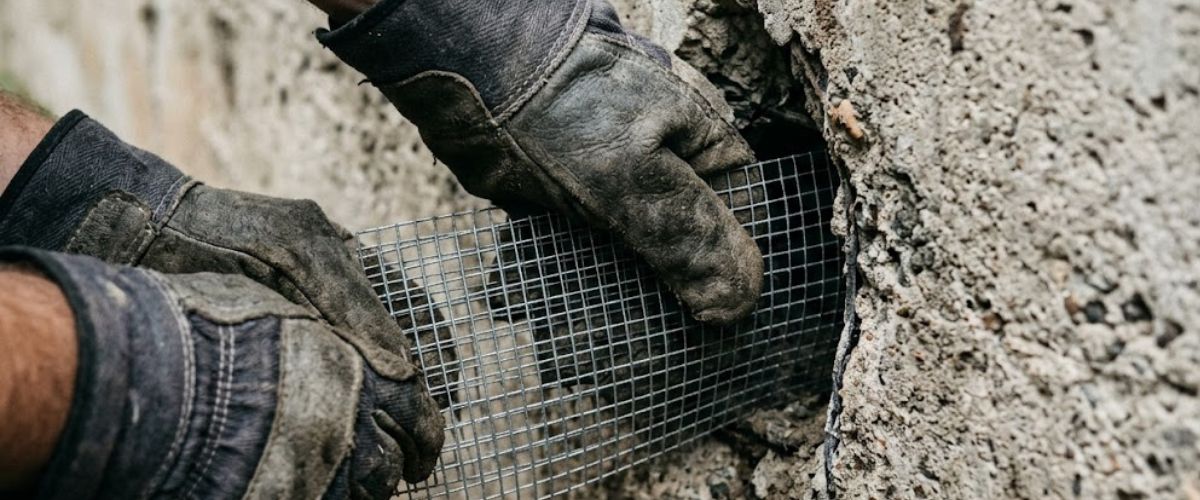
Utility penetrations, the most many entry point in Chattanooga homes
In our entry point detection surveys across Hamilton County, utility penetrations are consistently the most many individual entry point type, usually accounting for 40–60% of all gaps identified per home. A standard Chattanooga home has water supply penetrations at the foundation (2–3), gas line penetration (1), electrical service conduit (1), HVAC refrigerant line set (1–2 per unit), dryer vent (1), kitchen exhaust vent (1), bathroom exhaust vents (1–3), and cable or telecommunications conduit (2–4). That's 12–18 potential entry points before any structural gaps are counted.
The gap size around each penetration varies: a large gas line through a foundation block with an oversize hole may have a 1-inch gap. A refrigerant line set through an exterior stud wall may have a ¾-inch gap around the line bundle. A cable conduit through a soffit may have a ¼-inch gap where the original foam pulled away. Every gap large enough for a house mouse (¼ inch) or Norway rat (½ inch) is an active entry point. Systematic sealing of all identified penetrations is the highest-impact efficiency in the exclusion program.
Penetration sealing by location and type
- Foundation wall penetrations (water, gas, electric service): Copper mesh collar packed into the annular gap around the pipe, sealed with exterior-grade flexible caulk over the mesh. Heritage masonry foundations receive mortar-compatible sealing.
- Exterior wall penetrations (HVAC refrigerant lines, dryer vent, kitchen exhaust): Copper mesh collar around the line bundle or duct. Exterior caulk bead around the penetration collar. Dryer vent flapper assessed for seal when closed, stuck-open flappers are a direct entry point.
- Soffit penetrations (exhaust vents, cable conduit): Gaps sealed with paintable exterior caulk compatible with the soffit material. Heritage wood soffits receive material-compatible products from our historic home program approach.
- Crawl space floor penetrations (plumbing drain lines, water supply): Gaps around pipes penetrating the subfloor from the crawl space sealed with copper mesh and foam backer rod where appropriate. Particularly important where Norway rat activity is documented in the crawl space.
Pricing
| Scope | Typical range | Notes |
|---|---|---|
| Individual penetration (easy access) | $25–$45 | Ground-level, interior foundation, or crawl space access. Copper mesh + caulk. |
| Individual penetration (ladder/roofline access) | $45–$65 | Soffit, exterior high-wall, or roofline location. |
| Full utility penetration sealing (8–15 points) | $200–$450 | Complete home survey and sealing of all identified penetrations. |
Factors that change your specific quote
- Number of utility penetrations — typical home has 6-15 (water, gas, electrical, cable, phone, AC line set)
- Penetration condition — original sealant (often unsealed at construction) vs failed sealant
- Material around penetration — siding type and condition affects sealant adhesion
- Code-compliant materials — copper wool for fire-rated penetrations, hardware cloth for non-fire-rated
- Active activity indication — rodent grease marks or gnawing at penetration changes treatment
About insurance: Utility line penetration sealing is preventive and not covered. Damage from rodents that entered through these gaps (wiring damage particularly) may qualify under named-peril provisions.
Want your real number? Call (844) 635-0403 for a free on-site free penetration audit.
Common mistakes with utility entry sealing in Chattanooga
We seal the visible portion of the penetration while leaving the cavity behind it open. Many utility penetrations have a visible exterior seal that addresses the surface but leaves the wall cavity behind it open. Mice that breach the surface seal then have free run of the wall void. Properly executed sealing addresses both the exterior face and any cavity behind the penetration, usually with foam fill plus mesh barrier plus exterior caulk.
Trusting that new construction sealed all utility penetrations correctly. Building inspectors check that penetrations exist where they should, not necessarily that they're properly rodent-sealed. New construction with apparent finished work often has incomplete penetration sealing that becomes apparent only after fall pressure exploits it. Post-construction verification inspection finds these issues at first-year stage.
We use expanding foam as the entire seal. Foam alone provides air sealing but no mechanical rodent barrier. Mice chew through expanding foam in hours. Foam can fill the cavity behind a copper mesh barrier. Foam without mesh is functionally no seal at all from a rodent standpoint.
Skipping the abandoned utility line during sealing work. Disconnected gas lines from removed appliances, abandoned cable lines from previous services, unused electrical conduits, each is a penetration that's no longer in active service but still creates an opening. Identifying and permanently sealing abandoned utility penetrations should be part of full exclusion work, not treated as separate from the active-service penetrations.
Frequently asked questions
Why do utility penetrations create rodent entry points?
The hole drilled for a utility line is almost always larger than the line itself, leaving a gap of ½–2 inches that rodents exploit. Original caulk around penetrations in pre-1970 Chattanooga homes has often shrunk or fallen out over decades, reopening these gaps. Pipe settlement over time can create new gaps even in originally well-sealed penetrations.
What utility penetrations are most commonly missed?
Mini-split refrigerant line sets through exterior walls. Gas line at foundation entry. Electrical service conduit where it enters from the exterior meter. And the dryer vent exhaust, whose flexible plastic collar ages and develops gaps. These are the penetrations most frequently overlooked in self-assessed exclusion work.
Can you seal around active plumbing without disrupting service?
Yes, we seal the annular gap around the pipe, not the pipe itself. Copper mesh packed into the gap and covered with exterior caulk doesn't contact the pipe in a way that affects flow or service.
What does utility line entry sealing cost in Chattanooga?
Individual penetrations: $25–$65 depending on location and access. Full home utility penetration survey and sealing (8–15 points usually): $200–$450.
What utility lines are most commonly missed during home construction sealing?
Three categories produce most overlooked penetrations. Telecommunications cable (cable TV, internet, phone landline): retrofitted after original construction, often through hastily-drilled holes that aren't properly sealed. HVAC condensate drain lines: small but mouse-passable. Often exit through utility room walls or basement walls without sealing. Whole-house generator connections: where natural gas line and electrical conduit enter the building for generators installed after original construction. The pattern: original construction utilities are usually sealed. Retrofitted utilities frequently aren't because the contractor's job ends at the connection rather than at the sealing.
Do you coordinate sealing with utility companies during service connections?
Where the homeowner schedules it, yes. Major utility service work (new gas service, electrical service upgrade, fiber internet installation) creates penetrations that benefit from same-day or next-day sealing. The utility company creates the opening. We seal it with the appropriate material before the gap can be exploited. Homeowners usually schedule the sealing visit within 1–7 days of the utility work. The coordination is straightforward when planned in advance.
Can sealed utility penetrations be reopened for future service?
Yes, the sealing method allows future re-access without major destruction. Standard penetration sealing uses copper mesh and caulk that can be removed with a utility knife and screwdriver when service work requires re-opening. After service work completes, the same penetration is resealed with fresh materials. The cost of resealing is small (usually $50–$100 per penetration). Sealing isn't permanent, it's maintenance that gets refreshed when service work creates the need.
What happens to a utility penetration when the utility line is removed?
Permanent sealing, the penetration becomes a structural opening to be closed entirely rather than maintained as a service entry. Removed gas lines from disconnected appliances, removed cable lines from cancelled services, abandoned electrical conduits, each becomes a closed penetration with full-density sealing (concrete patch for masonry, structural foam plus exterior closure for wood-framed walls). Homeowners often forget about disconnected utility lines, which then become unused rodent entry points. Identifying and permanently sealing abandoned utility penetrations is part of full exclusion work.
Do you offer warranty on utility penetration sealing work?
Yes, standard 5-year warranty on materials and workmanship for sealed utility penetrations. If a sealed penetration shows seal failure (crack in caulk, displaced mesh, gap formation) within the warranty period, we return to repair at no additional cost. The warranty covers the seal itself. It doesn't cover new penetrations created by utility work or damage caused by structural settlement. Warranty registration happens at completion of the original work. Transferability to new homeowners is included if the property changes hands during the warranty period.