Rodent pressure in Chattanooga's retail corridors
Retail stores in Chattanooga face rodent pressure from three overlapping sources that require simultaneous management. Dumpster enclosures shared among strip-center tenants create consistent outdoor Norway rat colonies. Delivery activity, pallets, cardboard, food product shipments, creates regular opportunities for rodent hitchhiking into the stock room. And the food-waste volume in restaurant-adjacent strip centers sustains year-round pressure in the parking lot and building perimeter regardless of what individual stores do.
The highest-pressure retail corridors in Chattanooga are the strip centers along Brainerd Road, the East Brainerd Hamilton Place area, and the commercial corridors along Hixson Pike. These areas combine high food-waste volume from adjacent restaurants, aging dumpster infrastructure, and strip-center construction that creates wall-void connectivity between units. A documented monthly or quarterly program is the minimum effective approach for any retail tenant in these corridors.
What the retail rodent control program covers
- Stock room and receiving area: Snap traps along all wall junctions in the stock room, behind shelving, and near the receiving dock. This is where rodents spend the majority of their time in retail environments, away from light, near food product and cardboard nesting material.
- Back-of-house utility areas: Mechanical room, breakroom, and utility closets. Snap traps and monitoring stations in non-customer-accessible areas.
- Under-counter and point-of-sale areas: Snap traps behind POS base cabinets and under service counters where mice establish secondary runways after entering from the stock room.
- Exterior perimeter stations: Tamper-resistant bait stations along foundation perimeter and at dumpster enclosure corners. Pet-safe placement, stations positioned against the building, not in customer-accessible landscaping.
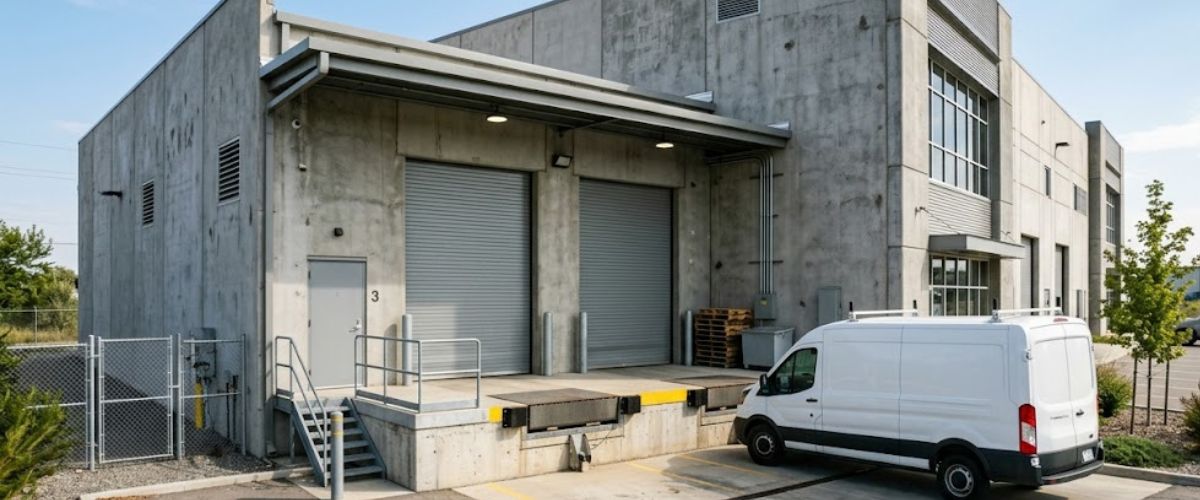
- Delivery entry point check: Regular assessment of the receiving dock threshold gap, dock leveler seal, and side entry door, the primary interior entry routes for rodents in retail environments.
Service scheduling and documentation
Before-hours visit
Interior treatment always scheduled before store open or after close. No customer-visible pest control activity during business hours.
Stock room priority
Stock room and back-of-house treated first and most thoroughly. Sales floor treated only if activity is detected there, and always in non-customer-accessible areas.
Activity log
Dated service record with activity level by zone, any pesticide application records, and structural observations. Provided same-day or within 24 hours.
Inventory damage flag
Any gnawed packaging or contaminated product identified during inspection is noted in the service report for your insurance and loss-prevention records.
Pricing
| Service | Typical range | Notes |
|---|---|---|
| Inspection + program design | Free | Full store walk-through, activity assessment, program recommendation. |
| Setup + first treatment (1,000–3,000 sq ft) | $250–$500 | Trap installation, station placement, receiving dock assessment. |
| Monthly maintenance | $125–$250/mo | Standard retail unit. Before-hours scheduling. |
| Quarterly maintenance | $175–$350/visit | 4 visits/year. Lower-pressure locations. |
Factors that change your specific quote
- Store square footage and stockroom size
- Foot traffic level — high-traffic retail can't close for treatment, schedule overhead
- Service frequency — monthly minimum standard, weekly for high-risk categories (grocery, pet)
- Documentation — corporate-format vs landlord-required reporting
- After-hours service capability for treatment
About insurance: Retail rodent control is operational, not insurance-eligible.
Want your real number? Call (844) 635-0403 for a free on-site commercial program consultation.
Common mistakes Chattanooga retail operators make with rodent control
Retail rodent issues become public-facing fast, a single customer sighting, especially one captured on phone video, spreads through review platforms and social media within hours. Five operator mistakes account for most of the public-facing retail incidents we respond to across Hamilton Place, Northgate, Brainerd Road, and the Highway 153 retail corridor.
We locate customer-facing snacks and concession near customer entry doors. Front-of-store snack displays, candy near checkout, packaged food at queue areas, beverage coolers near entry, create attractant pressure right at the highest-foot-traffic part of the store. Mice that enter through automatic doors during normal operation can establish in shelving directly adjacent to where they entered. Snack displays positioned away from automatic-door entry areas reduce the establishment opportunity.
Letting the back-of-house storage room become a long-term inventory holding area. Stockrooms designed for active inventory rotation become holding areas for slow-moving merchandise, returned items awaiting processing, and seasonal goods between cycles. The boxes accumulate, lose airflow, and become harborage. Active rotation discipline (genuinely shipping back returns, genuinely cycling seasonal stock) eliminates the harborage opportunity that long-term storage creates.
Sharing dumpster pads with food-service neighbors without coordination. Strip-center retail tenants often share dumpster enclosures with adjacent food-service tenants. The dumpster pad serves several businesses but no single tenant owns the maintenance. Cleaning frequency suffers, attractant pressure builds, and rodent activity affects every neighbor regardless of individual tenant pest programs. Center-wide dumpster maintenance contracts (paid through CAM charges) are more effective than tenant-level programs.
Storing rodent control product on retail shelves alongside merchandise. Retail stores selling consumer rodent control products (hardware stores, home centers, garden centers) sometimes store product in the same back-of-house area as snack inventory and food merchandise. Rodent attractant from the consumer-product inventory affects the food merchandise nearby. Physical separation between rodent control consumer goods and any food merchandise is standard for retail compliance.
We treat "after-hours sightings" as cleaning-crew problems. Closing managers and cleaning crews often see evidence of rodent activity (droppings, runway marks, occasional sightings) that doesn't get formally reported because it's outside normal operating hours and feels low-priority compared to the actual store operations. The cleaning crew usually isn't authorized to call pest control and the closing manager doesn't think the issue rises to the threshold. Clear after-hours reporting protocols catch issues at the early-stage activity level where they're cheapest to resolve.
Frequently asked questions
What's the biggest rodent risk for Chattanooga retail stores?
Inventory damage and customer-visible activity. A customer who sees a mouse in a retail store posts about it immediately. The correct program treats the stock room and back-of-house as the primary control zone, with exterior perimeter treatment preventing new animals from entering.
How do you treat a retail store without disrupting customers?
We schedule interior treatment before store hours or after close. Exterior station maintenance can occur during business hours. We don't use bait stations, aerosols, or anything with a visual or odor signature in the customer-facing sales floor.
Are strip-center retail stores at higher risk than standalone stores?
Yes. Strip centers share wall voids, utility corridors, and dumpster enclosures with adjacent tenants. A rodent entering through any unit can access adjacent units through shared wall penetrations. Strip-center control requires a building-perimeter approach, not a single-unit treatment.
What does retail store rodent control cost in Chattanooga?
Initial setup for a 1,000–3,000 sq ft retail unit: $250–$500. Monthly maintenance: $125–$250/month. Quarterly: $175–$350/visit.
How do you handle rodent control in a customer-facing retail space without disrupting sales?
All interior treatment happens before opening or after closing, usually a 6am or 9pm service window depending on the store's hours. Exterior treatment can happen any time since stations are on the building perimeter and dumpster pad, not in customer-facing space. Technicians wear retail-appropriate professional dress without aggressive pest-control branding when servicing during hours. Stock-room and back-of-house treatment is the only work that happens during customer hours, and it's invisible from the sales floor.
What's the rodent risk for retail stores in Chattanooga strip centers?
Strip centers. Hamilton Place outparcels, Northgate Mall outparcels, the strip retail along Brainerd Road and Highway 153, share three pressure factors. Common dumpster enclosure: any food-service tenant or pet-supply tenant in the center creates pressure that affects every other tenant. Shared wall construction: most strip-center buildouts have un-firestopped or poorly-firestopped party walls that let rodents move between tenant spaces. Shared roof structure: roof rats that enter one tenant's space can travel the entire roof assembly to others. Single-tenant exclusion work is only ~70% effective in strip-center buildings. Center-wide programs are dramatically more effective.
What does retail-tenant rodent control cost in Chattanooga?
Strip-center retail and shopping-center tenants usually pay $100–$250 per monthly visit depending on size, with quarterly programs running $300–$650 per visit. Big-box retail (Walmart, Target, Lowe's, Home Depot scale) is corporate-contracted at a national rate not visible to local tenants. Specialty retail with food adjacency (grocery, pet supply, garden center) runs 20–40% higher than general retail because audit requirements and inspection frequency are tighter. The biggest line-item variation is whether the landlord includes building-perimeter service in CAM charges or whether the tenant pays separately.
How do you treat rodent activity in customer-merchandise areas?
Same-day interior protocol: snap trap placement behind fixtures and at base of any product display where activity has been observed, removal of any visibly contaminated product (manager's discretion on the threshold), surface decontamination of the immediate area, inspection of adjacent storage and any food-service-adjacent zones. No rodenticide bait inside the store. Recovery usually takes 5–10 days from first treatment to verified clear, with daily trap checks during that window. Most retail customers don't notice unless we tell them, the work is non-visible by design.
What's the difference between food-handler retail (grocery, pet) and dry retail (clothing, electronics)?
Food-handler retail follows commercial food-service protocols: no interior rodenticide, exterior-only bait stations, regulatory-compliant documentation, weekly or bi-weekly service frequency to maintain inspector-ready logs. Dry retail follows commercial-property protocols: interior monitoring with electronic multi-catch traps in stock rooms and back-of-house, exterior bait stations on standard schedule, monthly or quarterly frequency depending on pressure. The biggest practical difference is documentation, food-handler retail needs every visit logged in inspector-ready format, dry retail needs only the basic service record.